
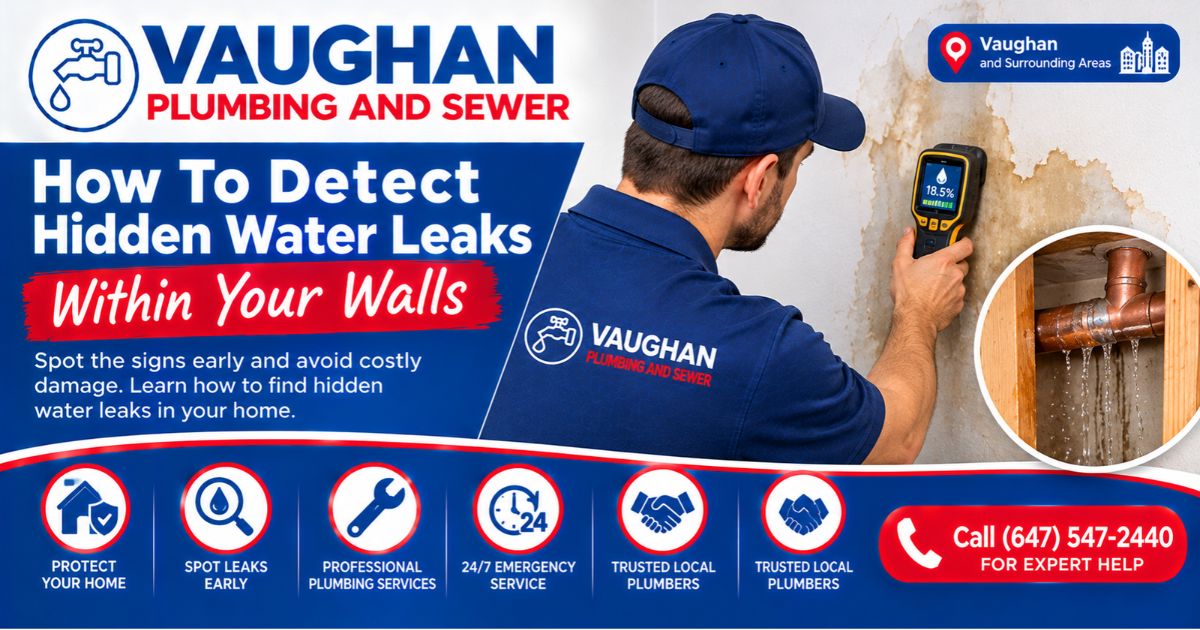
A leaking pipe will not always present as water dripping from your ceiling or pooling on your floor. You may notice signs like bubbling paint, a damp floor or an increase in your water bill. This could mean that you have water leaking behind your walls or under your floor, and this is an issue that needs to be addressed sooner rather than later. Detecting hidden water leaks can be a tricky issue to deal with, as you cannot see the issue. However, a small crack in your piping can cause damage to your drywall, flooring, insulation and other elements within your home. Luckily, there are signs you can look out for to reduce any extensive damage. This can help you avoid a large repair by knowing what to look for and calling a plumber. This guide explains how to detect a hidden water leak, why they occur and how professional leak detection can help Vaughan homeowners find the issue.
7 Signs Of A Hidden Water Leak
Hidden water leaks will rarely cause major issues. Instead, they can cause small signs of damage that are easily overlooked. Here are 7 signs to look out for.
1. Staining And Discoloration On Ceilings/Walls
Yellow, brown or dark staining on your wall/ceiling can be one of the first signs you notice. This is usually caused by a pipe leak and water seeping into your drywall, plaster or ceiling. Look for:
- Staining around bathrooms, kitchens or laundry rooms.
- Discoloration on ceilings below upstairs bathrooms.
- Staining that reappears after painting.
- Damp looking areas around fixtures and piping.
2. Peeling Paint, Bubbling Wallpaper Or Swelling Drywall
Have you noticed any peeling paint or bubbling wallpaper? This can be a sign of trapped moisture. Moisture can cause your drywall to become soft and swollen. This can cause blistering on your paint and loosen your wallpaper. You may also notice a section of your wall feels softer. In some cases, this could be near a bathroom, kitchen sink or water supply. These are important signs to look out for. Especially if the issue is getting worse.
3. Musty Odour
Sometimes your nose can smell a plumbing issue. If you notice a musty or damp smell in a certain room, this can be a sign of trapped moisture behind your walls, under your flooring or in your cupboards. Trapped water can create the perfect conditions for mould to grow. You may notice this more in:
- Bathroom cupboards.
- Around kitchen sinks and dishwashers.
- Basement rooms.
- Baseboards and carpets.
- Rooms that are kept closed for long periods of time.
Opening windows or using air freshener to try to mask the smell will not solve the issue. If you are noticing the smell regularly, it will be worth looking into.
4. Damp, Wobbly Or Soft Floor
Leaking water under your floor can be tricky to detect. However, your floor can show signs of damage. Wood flooring can become swollen and warped. Laminate can begin to lift. Vinyl can become loose and bubbly. Look for:
- Soft or sponge-like flooring.
- Raised sections of flooring.
- Gaps appearing in wood flooring.
- Lifting tiles.
- Damp carpets or strange wet areas.
If you notice any of these issues near a bathroom, kitchen or laundry, it could be a leaking water line.
5. Increase In Water Bill
Another warning sign is an increase in your water bill. If you haven’t bought any new appliances, used more water or changed your daily habits but your bill has gone up significantly, it would be worth checking your plumbing.
Having a high water bill in Vaughan with no clear reason can be due to a leaking pipe, running toilet, faulty fixture or constant loss of water. Try doing a quick test:
- Turn all taps, showers, washing machines, dishwashers and other water using appliances off.
- Ensure your toilets aren’t running or filling.
- Note your water meter reading.
- Do not use any water for approx. 30 minutes.
- Check your water meter.
If the reading has changed whilst no water was being used, there may be a leak. Whilst this can help identify if there is a potential issue, it won’t tell you exactly where the leak is. Some properties have irrigation systems and other water connections.
6. Water Sounds
A quiet house can help you hear any water sounds. If you’re hearing gentle dripping, hissing, or water sounds when everything is off. This could be:
- Behind a wall near a bathroom or kitchen.
- Underneath your floor.
- Around piping.
- Near your basement ceiling.
Before assuming this is an issue make sure nothing is making a normal noise. Appliances, heating and toilets can all make noises. If it continues and you can’t identify the source, it could be due to a hidden plumbing leak. You won’t need to open up your wall as a plumber can use specialist equipment to narrow down the issue.
7. Low Water Pressure
A sudden or gradual decrease in your water pressure can be a sign of a leak in your water supply. You may notice that your shower doesn’t have as much pressure or your kitchen tap isn’t flowing as well as usual. A damaged pipe can cause water to leak before reaching your fixtures. However, low water pressure can be due to a number of issues. Mineral build up, faulty pressure regulation, partially closed valves, and issues with the water supplied by the municipality can all cause similar issues. If you’ve noticed a sudden change or multiple fixtures are affected, it would be worth having a look at your plumbing.
How To Detect A Hidden Water Leak
You don’t need any specialist equipment to do a few simple checks around your home. This can help you understand if there is any water leaking from your plumbing.
Water Meter
If you believe there is a leak but cannot see it, the best place to start is your water meter. Turn off all water using fixtures and appliances. Note your water meter reading. Do not use any water for 30-60 minutes. Check again.If the reading has changed, this means water is still flowing through. This means there could be a leak.
Cupboards & Sinks
Kitchen and bathroom cupboards are an easy place to overlook. A slow leak can cause damp to appear on your cupboard floor long before it reaches your floor. Open your cupboards and look for:
- Damp spots or swollen boards.
- Droplets around piping.
- Rust around shut off valves.
- White mineral buildup around connections.
- Musty smells in enclosed areas.
You can also run a dry towel around any accessible piping. If it comes back wet, there may be a leak nearby.
Toilets & Water Using Appliances
Not all hidden leaks will be from a pipe behind your wall. Toilets, washing machines, dishwashers, fridges with water dispensers and water heaters can all leak. Check behind and underneath for any damp, staining or damaged flooring. Check your toilet tanks for any silent leaks. Add a few drops of food coloring to the tank. This can help you identify if there is a leak into the bowl. If you can see the color in the bowl without flushing, then your toilet tank is leaking.
When The Damp Occurs
This can help you narrow down where the issue may be. If you’re noticing your ceiling staining getting worse every time someone uses the shower upstairs, then you may need to look at your bathroom plumbing or drainage. If it is only appearing after heavy rain, it could be an issue with your roof, outside walls, windows or foundation. Not an issue with your internal water supply. If the damp is appearing regularly, it could be a plumbing issue. This won’t give you confirmation of what the issue is, but can help give your plumber useful information.
How Do Plumbers Find Leaks Behind Walls & Under Floor?
Finding a leak can be tricky. Water can travel through your pipes, floor joists and other elements before it becomes visible. Plumbers have specialist leak detection equipment to help them find where the issue is. Some of the ways they may do this are:
Acoustic Leak Detection
A leaking pipe can cause vibrations or noises. These can be hard to hear without specialist equipment. Acoustic leak detection devices can help plumbers identify where the water is leaking from. This is great for hidden pipes or concrete flooring.
Thermal Imaging Cameras
Thermal imaging cameras can help identify temperature differences. If your hot or cold water supply is leaking, it can create a temperature difference. A plumber can look for these temperature differences to identify where there may be hidden moisture. This won’t show a plumber if there is water in your wall but can identify temperature differences.
Moisture Meter
A moisture meter can help measure how much moisture is in your drywall, wood and other elements. This can help plumbers identify where the issue is by comparing the affected and unaffected areas.
Pressure Test
If you suspect there is a leak in your water supply, a plumber can do a pressure test. This will help identify if your plumbing can maintain normal pressure. If there is an unexplained drop in pressure, there may be a leak. Further tests can help narrow down where.
Camera
In some cases, a plumber can use a plumbing camera to look at accessible pipes and drainage. A small camera can be fed through the pipe to identify any cracks, damaged areas, loose connections or other issues. This is great if you suspect there is a leak in your drainage. The main benefit of having a professional plumber do leak detection is that they can help identify where the real issue is. They won’t be guessing where the water is coming from and can use their findings to plan a targeted repair.
Why Do Hidden Water Leaks Happen In Homes?
Knowing what can cause hidden water leaks can help you know where to look. Some of the most common causes are:
- Old piping – Piping can get old and cause corrosion, weakness or small cracks.
- Loose connections – Piping can become loose, causing water to leak.
- High pressure – High pressure can cause extra strain on your piping, valves and connections.
- Freezing temperatures – Water can expand in your piping when it freezes, causing cracks or bursts.
- Poor installation – Piping may not be installed correctly causing issues to appear sooner.
- Worn seals – Seals around plumbing can become worn.
- Damaged water supply – Flexible hoses can become cracked or loose.
In Vaughn, you may want to consider the temperature. Piping in areas that aren’t well insulated like outside walls, garage and non-heated areas can be prone to freezing. Even a small crack can cause water to leak once it thaws.
Why You Shouldn’t Ignore Hidden Leaks
It can be easy to ignore a small damp area. However, a hidden leak can cause more than just damage to your wall or floor.
- Structural Damage – Constant damp can cause your drywall to weaken, damage the wooden frames and affect your flooring. Prolonged exposure can also cause damage to other elements.
- Mould – Damp enclosed areas can create the perfect environment for mould. Once it has started growing behind your walls or under your floor it can be a tricky issue to resolve without finding the source of the moisture.
- Costly Repairs – Whilst a small repair to your piping may not be too bad, if the water has got into your insulation, flooring, cupboards or wall structure you may need extra restoration.
- Wasting Water – Even a slow leak can cause you to waste water constantly. This can cause unnecessary costs on your monthly bills.
- Damage To Surrounding Areas – Water can travel through your buildings causing damage to your ceiling, adjacent rooms and lower areas of your home.
The sooner you can identify where the issue is coming from, the better chance you have of limiting the damage.
When To Call A Professional Plumber in Vaughan, ON
Whilst it can be helpful to do a bit of investigation around your home, there is a point where it can cause more harm than good. Call a plumber if:
- Your water meter is moving when no water is being used.
- You’re noticing damp areas regularly.
- Your flooring is becoming soft, swollen or warped.
- You can hear water running behind your walls.
- You’re noticing an increase in your water bill.
- You suspect there is a leaking pipe under your concrete flooring.
- You’re noticing mould or damp near your plumbing.
If you discover there is active flooding, a burst pipe or the water damage is spreading quickly, turn your main water supply off (if it’s safe to do so) and call for urgent plumbing assistance. Avoid standing in any water near electrical points.
Protect Your Home With Professional Leak Detection in Vaughan, ON
A hidden water leak can be much easier to deal with if you can identify it early. You don’t need to wait for your ceiling to drip or replace a section of flooring. If you’ve noticed any strange damp areas, unusual water noises or an increase in your water bill, Vaughan Plumbing & Sewer can help investigate the issue. A professional leak detection service can help identify where the hidden plumbing leaks are coming from. We can help you decide the best way to repair the issue. Instead of guessing where the water is coming from or opening up your walls, call us to have your plumbing checked. Call Vaughan Plumbing & Sewer today for a professional water leak detection service.
