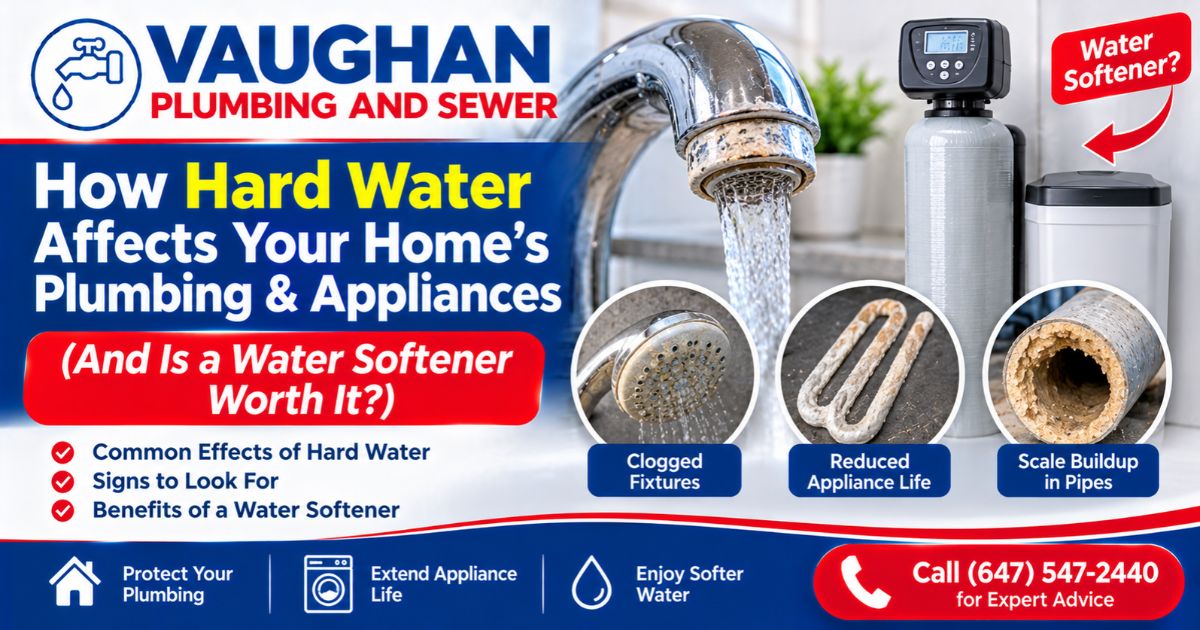
Have you noticed you’re having difficulty getting rid of those stubborn white deposits after cleaning your shower, kitchen tap and running your dishwasher? You may also notice you’re having problems with your laundry feeling rough, your water heater and that you’re using too much soap. What’s going on?
Hard water is water that contains naturally occurring minerals, mainly calcium and magnesium. Whilst this isn’t generally a concern to your health, it can cause issues with build up in your water supply and cause issues with your fixtures, heater and other appliances. In Vaughan, it is important for homeowners to be aware of this issue. The average water hardness within the York Water System for Vaughan in the second quarter of 2026 was 128mg/L. This is within the hard water range for York Region. But should you have a water softener installed? Or is it a case of regular maintenance? Let’s look at what hard water can cause, the signs to look out for and why you may want to invest.
What is Hard Water and How Does it Affect Your Plumbing?
Water with higher levels of calcium and magnesium in it is considered hard water. As water moves through the soil and rocks, naturally occurring minerals start to deposit. When this happens, and the water gets heated or evaporates, a chalky residue can be left behind. This is usually the first place where you will notice it near your taps. However, it can build up in places which are not easy to clean, such as your water heater, valves, and pipework. It is quite simple to get rid of some buildup in your faucets, but when it starts to accumulate in your appliances, it may cause maintenance problems. Having hard water does not mean that your pipes and appliances are going to get damaged. This depends on the hardness of your water, how much water you use, the condition of your appliances and how much buildup there is.
6 Ways Hard Water Can Affect Your Piping and Appliances
1. Buildup Can Occur
One of the main concerns people have is the buildup of scale in their pipework, faucets, shower heads and other water appliances. As the scale builds up it can cause a blockage. This can cause your shower head to spray unevenly, less water coming out of your faucets and frequent cleaning of your appliances. Low water pressure can be caused by many factors. There may be leaking pipes, pressure regulating issues, partially closed valves and other issues. If you are noticing a lack of water flowing from multiple appliances, then get someone to investigate the cause.
2. Increased Maintenance of Water Heaters
Water heaters can be a concern as they are constantly heating up your water. Depending on the appliance and water, scale can build up around your heating elements or inside the tank. This may bring about problems with the transfer of heat. This may make some tank-type water heaters produce odd popping sounds and rumbles. This may have an effect on efficiency and lead to more maintenance work. If your water heater is taking too much time to heat water, producing strange sounds, or unable to give enough hot water for your family, then it might not be a result of the hard water. There might be a problem with the sediment, heating elements or thermostat. Having your water heater checked by an expert will enable you to find the actual problem.
3. Less Efficient Dishwasher and Washing Machine
Each time you use your dishwasher or your washing machine, water comes into play. In case the water contains a large number of hardness mineral, then the formation of scale takes place within the appliance. This leads to the formation of spots in your glasses when using a dishwasher, the formation of spots on the dishes and the deposition of chalk. It could lead to poor performance of your detergent. Scale formation leads to the problem while cleaning clothes using a washing machine. Before you consider replacing your appliance, check the filter, cleaning cycle, detergent settings and maintenance guidelines. It may not be the water being hard.
4. White Build Up Around Taps, Showers and Bathrooms
Scale is usually indicated by white deposits on your taps, showers, sinks, and shower heads. When allowed to remain there for weeks or months, it can be hard to remove. It may result in spraying that is uneven from your shower heads and aerators that are partly clogged. With regular cleaning of your appliances, you can be able to prevent any such deposits. Always use an appropriate cleaning agent for the material your appliance is made of.
5. Difficult to Clean Due to Soap Scum
Have you ever found yourself cleaning your shower twice and it’s still dirty?
The presence of hard water causes a reaction with your soap, forming a deposit of soap on your shower walls, bathtub, sink, and glass doors, resulting in a cloudy or streaked look. Your soap and shampoo may also not form as many bubbles. This may make you use more of them. By using a water softener, you are able to lower the mineral concentration, making it easy for the soap to produce bubbles. However, you will still need to clean your bathroom, but removing the soap deposits will be easier.
6. Clothes Feel Scratchy
Your detergents and the rinsing process may become a problem because of your hard water. The state of your clothes will vary according to the hardness of your water and type of your detergent. If any of the above is applicable to you then ensure that your detergent suits your hard water and that you use the right amounts of it. More is not necessarily better A water softener can help you to make your clothes clean by lowering the mineral content of the water. But other factors like the state of your clothes and detergent will also matter.
Signs You May Have a Hard Water Issue
Hard water may not cause a major plumbing issue but you may notice some small issues.
- White, chalky buildup around taps, shower heads and sinks.
- Cloudy spots on glasses and dishes.
- Soap scum building up quickly.
- Uneven spraying from shower heads.
- Scratchy-feeling clothes.
- Buildup in kettles, coffee machines and other water using appliances.
- Frequent descaling required.
Whilst one sign may not be enough to confirm you have hard water, multiple recurring issues will give you a better indication. If you live in Vaughan or another location in York Region, then check the latest water quality information. If you use a private well then this can be useful to check as the minerals may differ.
What is a Water Softener?
A water softener is an appliance designed to soften the calcium and magnesium in your water. Most traditional whole house water softeners use an ion exchange process. The calcium and magnesium ions are attracted to resin beads inside the system. These are replaced with sodium ions or potassium ions depending on the system. As the water passes through the unit, the hardness is reduced and passed onto your appliances and fittings. Over time the resin will need to be recharged with a salt based solution. This means traditional water softeners will need topping up with salt and regular maintenance. A correctly sized and maintained system can help reduce any new scale build up. However it won’t remove all the contaminants, repair any damage to your pipes, remove any blockages and shouldn’t be relied on as a drinking water filtration system.
Should I Get a Water Softener?
For many households who are having issues with ongoing scale buildup from hard water a water softener can be a good investment. However, it is not essential for all homes. Consider the following:
| Your situation | Is a water softener worth considering? |
| White mineral deposits keep returning on fixtures | Yes, particularly if water hardness is confirmed. |
| Your water heater or appliances need frequent descaling | Potentially. Check the manufacturer’s maintenance requirements and assess the cause first. |
| You spend a lot of time removing soap scum | Yes, if hard water is contributing to the residue. |
| Your water pressure has suddenly dropped | Not as the first step. Investigate the plumbing fault before choosing treatment. |
| You have few mineral deposits and no recurring issues | You may not need one. Test the water and weigh the costs against the benefits. |
| You rely on well water with changing mineral levels | Testing is especially important before selecting a treatment system. |
What are the Main Benefits of a Water Softener?
Installing the correct water softener can help with:
- Reduced scale build up – Help protect your plumbing and water using appliances.
- Easier to clean – Less scale build up to cause difficult to clean spots and soap scum.
- Improved washing – Help soap work better.
- Reduced maintenance costs – Can help reduce some cleaning and descaling requirements. This will depend on your home and appliances.
- Improved appliance performance – Can help your appliances work as intended. However it does not guarantee they will last longer or save you money on energy bills.
Considering the long term benefits can help you decide if it’s worth the cost of the equipment, installation, salt, water and maintenance.
What are the Disadvantages of a Water Softener?
Whilst a water softener can be useful, it isn’t a completely maintenance-free option.
- Cost to install and run: You will need to consider the cost of purchasing, installing and if applicable, topping up with salt. Regular maintenance will be required.
- Space required: A whole house system will need to be installed somewhere suitable. You will need access to your water, drainage and, if required, power.
- Increased sodium levels: Traditional sodium-based systems will replace the calcium and magnesium with sodium. Depending on how hard your water is, you will have more added.
- Water and maintenance: Salt-based systems will use water to recharge. Regular checks will be required.
- Not a full filtration system: A water softener will mainly help with the hardness. Don’t rely on it to test or treat any bacteria, lead or other contaminants.
Things to Consider When Installing a Water Softener in Vaughan
Before you decide to install a water softener, make sure your water is hard. Consider:
- Water hardness: How hard is your water? How many minerals are in it?
- Water usage: How many people are in your household and how much water do you typically use?
- Pipework: Will there be enough space to install? Are there any issues with your pipework? Drainage?
- Drinking water: Do you need a separate water supply?
- Long term maintenance: How much salt will be required? How should it be set for recharging? How often should it be maintained? How much will it cost to run?
If you choose the correct system for your home, you can help reduce the hardness throughout your home. If you choose a system that is too big/small or not properly maintained, then you may not see the results you are looking for.
Can Hard Water Cause Irreparable Damage to My Pipes?
Scale buildup from hard water can occur in your pipes, but that does not necessarily mean that you will have to replace all of them.
Depending on the level of scale formation, what type of pipes you have, their age, water conditions and condition of your pipes, you might only have to clean or replace the affected fitting. On the other hand, if there is a blockage or damage to the pipe, you will most likely have to consult a professional.
Please keep in mind that scale and corrosion are two different things. Corrosion, leaking and pressure problems can be caused by other things.
If you have any concerns about hard water in York Region, do not think that simply installing a softener will solve all your problems with blockages, low pressure and leaking. An inspection will reveal whether it is due to minerals, mechanical issues, damaged pipes or something else.
How Can I Reduce Issues With Hard Water?
If you are not ready to invest in a whole house system, there are things you can do.
- Regularly clean your fittings: This will help reduce any new scale buildup.
- Descale when required: Follow the manufacturer’s guidelines for your kettle, dishwasher, coffee machine and water heater.
- Use the correct detergent: Choose a detergent suitable for your water and use the correct amount.
- Have your water heater maintained: Follow the manufacturer’s guidelines for when it should be serviced.
- Check your aerators and shower heads: Clean any removable parts if there is a scale buildup affecting the water flow.
- Check your water: Make sure you know how hard your water is before spending any money on treatment.
Get the Right Plumbing Advice For Your Vaughan Home
Whilst hard water may seem like a small issue with a few white marks around your taps, it can cause issues with cleaning and increase maintenance of your water-using appliances. The sensible thing to do is to confirm how hard your water is and what issues it is causing. This will help you decide if regular maintenance, targeted plumbing repairs, or a water softener is the best value for your home. Vaughan Plumbing & Sewer provide plumbing and sewer services in the local area. We can help with drain cleaning, plumbing repairs and sewer inspections. If you are having issues with low water flow, regular blockages or other plumbing issues, we can help assess the issue and suggest the next steps. Contact Vaughan Plumbing & Sewer on (647) 547-2440 for plumbing advice in Vaughan and the surrounding area.
