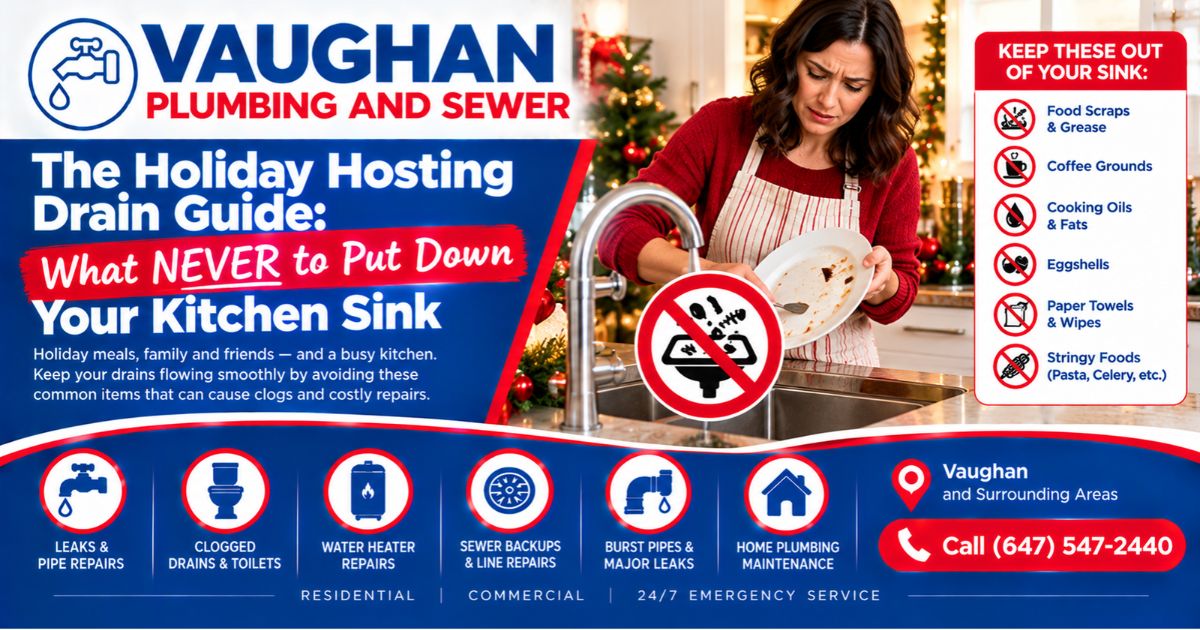
Hosting a holiday entails a lot of food preparation, a hectic kitchen and a sink which is continuously in use. With cooking food, washing greasy baking trays and cleaning up after guests, it becomes easy to dispose of items in the kitchen sink without much thought. This problem will arise later on. The water will start draining slowly, there will be a bad smell coming from the sink, or the kitchen sink will cease to function at the time it is needed the most. A bit of caution when preparing and cleaning the food will help avoid this. Here is what should never be disposed of in the kitchen sink if you are hosting guests in Vaughan this holiday ‘season.
1. Cooking Grease, Oil, and Meat Drippings
Never put grease or cooking oils down the drain in your kitchen, even if you run hot water afterwards to flush it through. Even though grease in its heated state is easily poured, once it cools inside the pipes, it sticks to the walls of the pipe and starts to collect food remnants and other waste. It becomes narrower and causes blockage. Holidays result in plenty of greasy leftovers like bacon grease, turkey drippings, butter, gravy, and frying oil.
Instead: Let the grease cool, put it in an appropriate disposable container, and throw it away in the garbage when it cools enough to solidify. Wipe greasy pots with a paper towel before washing them. Hot water and dish soap can clean up some residues, but they won’t make pouring the leftover grease down the drain right.
2. Turkey Skin, Fat, and Bones
Turkey preparation for the holiday season is certainly going to result in plenty of leftovers. Even though you may be tempted to clean up your cooking implements directly in the sink, turkey skin, fats, and bones need to go straight in the trash. Turkey fat can result in grease accumulation in the kitchen sink, while bones may get stuck in the drain and break down the garbage disposal. Even small bones can create problems getting stuck in the wrong places. What to do instead: Have a bowl handy while preparing your turkey. Instead of rinsing your bones, skin, and trimmings straight in the kitchen sink, put all the leftovers in a bowl.
This tip will save you a lot of time while cleaning the kitchen when it’s full of people.
3. Coffee Grounds and Tea Leaves
Following dinner, someone brews coffee or tea. A little coffee ground or tea leaf finds its way to the kitchen sink, and no one worries about it. However, the issue is that coffee grounds do not dissolve in water. They might clog the pipe along with grease, while the tea leaves might contribute to the debris clogging up your pipe. Though it does not take one time to clog the pipe, the accumulation of such garbage over time can cause an obstruction. Alternative: Put the coffee grounds or tea leaves filtered through coffee filters, French press, or tea strainer into the dustbin. Take out all the coffee grounds from the coffee makers and wash them.
4. Potato Peels, Onion Skins, and Vegetable Scraps
Preparation of holiday meals usually entails peeling potatoes, cutting vegetables, and making huge portions of stuffing, which can cause trouble if they get into the kitchen drain. Peels of potatoes have starch in them, which can turn into a gooey substance when mixed with water. Onions and fibrous vegetables may wrap themselves around the parts of the garbage disposal. The fibres of celery and corn husks are especially hazardous because of their stringy nature.
Instead: Place peelings and chopped vegetables in a compost container or trash bin. You can use a sink strainer to trap any tiny pieces that may slip out while you are washing them. A garbage disposal is not an alternative to the trash bin. Before feeding any food scraps into the machine, consult the instruction manual of the manufacturer.
5. Rice, Pasta, and Stuffing
Residuals from rice, pasta, noodles, and stuffing could look soft enough to clean through the rinsing process.However, such foods have a chance of taking up water, swelling, and bonding on their way through the pipes. The issue could be easily ignored while disposing of a pot of pasta and doing post-dinner dishes.
Instead: Send your residues into the garbage can or an organic waste management channel. Drain pasta and rinse rice through a fine mesh filter into the kitchen sink. Do not use extra water to flush down the starch food residues.
6. Flour, Dough, and Baking Mixtures
There is another possible cause of blockages due to baking during holidays that might not be obvious at first glance. Flour, cake batter, cookie dough, and all other sticky foods have the possibility of sticking inside your pipes. The paste that will form once the flour mixes with water could contain pieces of food that will eventually harden and form a tough blockage, along with the grease.
What you need to do instead: Remove all excess batter or dough from the bowl and dispose of it in the trash before cleaning the dishes or utensils. Wipe down all equipment first with a paper towel before washing as usual.
7. Eggshells and Small Food Debris
People tend to consider eggshells safe due to their ability to shatter into small bits. But the fact is that crushed shells can accumulate in grease and other materials along the pipeline. Moreover, eggshells cannot be considered a dependable means of garbage disposal. It applies to small bits of food leftovers as well. A sink strainer may retain bigger pieces, but small pieces can pass through the strainer without being caught.What should you do? Put the eggshells into the garbage or use them for composting if there is an opportunity. Clean your sink strainer more often, especially after making dinner.
A couple of seconds spent on cleaning will save you from having more trouble later.
8. Dairy Products and Thick Sauces
Excess cream, milk, and creamy sauces or thick gravy may not seem harmful to your pipes, but disposing of them in large amounts will cause you to add additional food waste and may result in residue and odour buildup. Creamy sauces can also have fat content that sticks in your pipes when mixed with other grease waste from your kitchen. What should you do? Scrape thick sauces into the trash or where you dispose of your food waste. Allow your greasy food waste to cool before disposal and clean the container before washing. When it comes to soups and sauces, separate solid foods before throwing the whole serving dish into the sink.
9. Harsh Chemicals, Paint, and Leftover Cleaning Products
Holiday cleaning can be much more than just cleaning the dishes. This means that you will need to clean a dirty roasting pan, get rid of expired products, and do a house project before your guests arrive. Never flush paints, paint thinner, solvents, and other dangerous substances into your kitchen drain. Some chemicals can damage your plumbing pipes, interfere with the wastewater treatment process, and contaminate the environment. Drain cleaners should be used with caution too. The mixture of various products can produce dangerous chemical reactions, while the repeated use of some products will damage your plumbing. So what should you do? Read the labels of the products and follow the instructions regarding waste disposal in your area. Get rid of dangerous household chemicals at the appropriate locations if needed. Find out the source of the problem before applying any chemicals.
10. Food Scraps Hidden in Dirty Dishwater
One of the easiest things to do wrong is washing an entire sink load of dirty dishes without first scraping off any leftovers. Small particles of vegetables, meats, rice, and other foods can fall into the drain opening. These can, in combination with grease, contribute to a slow formation within the pipes. The installation of a strainer will help, but it cannot substitute for proper scraping.
Instead: Always scrape dishes prior to washing them; clean out the sink strainer often and don’t rinse too many foods down the drain. If using a garbage disposal, follow its instructions.
How to Protect Your Kitchen Drain When Hosting Guests
Your holiday schedule need not be changed completely in order to keep your plumbing healthy. Only some changes will allow you to work faster and to avoid having your kitchen sink clogged.
- Keep a scrap container: Rather than flushing the scraps away during your cooking process, hold onto them for later use.
- Provide grease disposal: There should be some point where you can dump your cooked fats or oils.
- Use a sink strainer: Do not let food pass through the strainer and enter the pipes.
- Scrape off the grease before washing: With a paper towel, remove the excess grease from the pots and pans.
- Check the strainer frequently: You do not want to accumulate food scraps in front of the drain opening.
- Let your guests know what not to flush: A simple message will prevent you from flushing your coffee grounds, grease and food scraps.
- Look out for slow draining: In case water starts to collect in the sink, then stop using it immediately.
What If Your Kitchen Sink Starts Draining Slowly?
Slow kitchen drains may point to grease or food deposits and even to a clog further down in the drain line. Also, you may notice bubbles, unusual noises, or foul odours. Begin by clearing any visible waste from the drain opening and cleaning the sink strainer. Do not attempt to send the waste deeper into the pipes or continuously pour corrosive chemicals down the sink. In case the water starts draining slowly, backing up, or completely stopping moving, then it is time to check what is going on. Persistent blockages will likely need professional servicing more than just additional DIY solutions. Vaughan residents can set up professional kitchen sink drain cleaning in case there is difficult buildup to take care of. A plumber may decide that either drain cleaning or drain inspection should take place depending on the location of the clog.
Keep Your Holiday Kitchen Running Smoothly
By far the easiest kitchen drain problems to fix would be those which you can prevent. Greases, coffee grounds, vegetable peels, bones, and everything else must be kept away from the sink, as well as plate scraping. Should your kitchen drain already be having problems with slow or frequent clogs, now would not be the time to let them be. We offer plumbing and drain solutions in Vaughan, including kitchen drain cleaning solutions, to help homeowners deal with their plumbing issues. Feel free to contact us at (647) 547-2440 for professional solutions to your kitchen drain issue. Some preparation beforehand will save you trouble as well as extra time with your guests during the holiday season.
Frequently Asked Questions
- Should I use hot water to clean out my kitchen drain?
While you can wash some of the loose particles in the pipe with hot water, it is unlikely to dissolve grease that has settled in your pipes. You should not use cooking oils or fats in the drain even if you run hot water.
- What foods should not go through the garbage disposal unit?
There are several types of foods which should not be disposed of using a garbage disposal. This includes bones, stringy vegetables, starchy foods, and other kinds of food waste.
- Why is there an awful smell in my kitchen sink after holiday cooking?
Food particles, grease, and other organic matter may accumulate within the drain pipe and cause foul smells. Clean the filter and get rid of any debris you see. If the odour remains, a plumber will investigate for more stubborn clogging or any other draining problem.
- Is it advisable to use a chemical drain cleaner to unclog my kitchen sink?
Chemical drain cleaners are not necessarily the best answer. They can corrode specific plumbing materials, and mixing different chemicals can be harmful. Carefully follow the instructions for each product.
- When should I contact a plumber in case of a blocked kitchen sink?
You should contact a plumber if the sink is not draining, there is water backing up, multiple drains are having trouble at once, or if the clog is recurring.
