The strange sounds that occur within your walls can influence how you use your evenings. It may seem like the sounds are mere annoyances, but the strange sounds that occur within your plumbing system usually indicate rising water pressure or poor connections in your pipes.
Neglecting these signs might lead to bursting of supply lines, water leaks and damage to your property. According to the Insurance Information Institute’s insurance statistics, water damage and freezing are 27.6 percent of annual homeowner insurance claims.
Learning how to fix noisy pipes in Vaughan might save you thousands of dollars on unexpected costs. Knowing what plumbing repair and replacement in Vaughan involve will give you an upper hand when trying to control the plumbing system in your home before minor sounds lead to disaster. Continue reading to find out what each knock, whistle or rattle in your plumbing system means and how to fix it.
The Most Common Plumbing Sounds and What They Really Mean
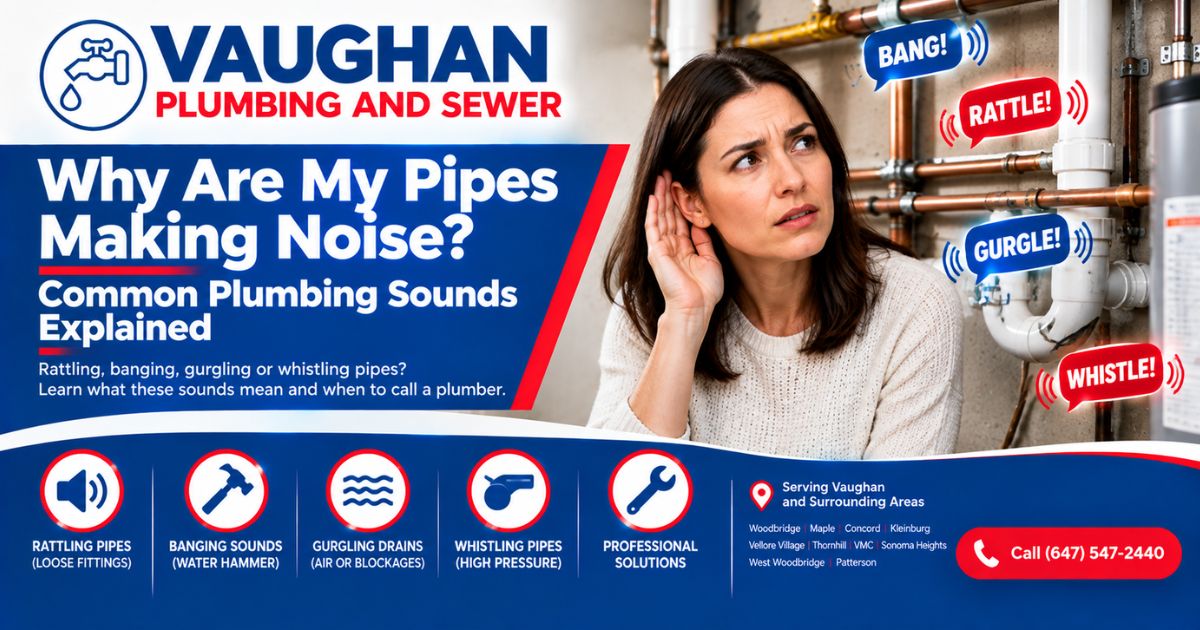
Plumbing pipes have their own language. Every individual sound indicates a unique mechanical problem within your plumbing lines. The ability to recognize the exact sound can help determine the exact problem.
Banging or Thumping
When a person shuts off the faucet abruptly, the flowing water is stopped suddenly and hits the shut-off point hard. This generates a shock wave that moves backwards through your pipes that could be either PEX or copper. Pipe banging is something that people notice all the time when turning off the running water from such things as washers or toilets. This hydraulic shock is something that weakens solder joints and creates holes in walls over time.
High-Pitched Whistling or Squeal
Running water produces a hissing sound when there is limited flow within your supply pipes. Old rubber washers, buildup at the valve seat, or malfunctioning pressure regulator valves are some of the reasons for the whistling of plumbing pipes. Water passes through narrow slits very quickly to produce a whistle-like sound.
Rattling or Vibrating Behind the Walls
The flow of water through pipes causes line vibrations. When pipe clamps are not installed by home constructors or when mounting straps become loose over time, copper pipes vibrate and knock against wooden studs. People living in houses are aware of the vibrations of the water pipes mostly during a flush of toilets and showers upstairs. The pipes may gradually wear the metal thin due to rubbing on drywall.
Gurgling or Bubbling from Drains
Drain pipes should receive constant airflow from vent pipes from the roof in order for water to flow smoothly in your main sewer drain pipe. Partial blockage due to grease, soap and tree roots will inhibit air flow and make the formation of air bubbles which float to the top of water in P-traps. If your drains gurgle while using the kitchen sink or tub, there is no ventilation.
Humming or Buzzing When Faucets Turn On
The presence of a low humming noise is generally an indication that you have high water pressure within your house because of the city water supply. In cases where there is too much pressure within the incoming water, the water starts vibrating excessively while moving through the main water supply pipes.
Persistent Dripping or Ticking Sounds
Tickling noises within the wall after taking a warm shower are caused by thermal expansion. Warm water causes the pipes made of metal or plastic to expand and contract while moving against the floor joists. A rapid ticking noise that occurs even when there is no use of water in the house indicates a leaking pipe problem.
What Causes Plumbing Noises in Vaughan Homes?
Unique Environmental Features In Vaughan Cause Noise In The Pipes
- Extreme Temperature Changes During Winter Months: Colder temperatures cool down the pipes that are laid underground. This results in the metal or plastic pipes contracting and expanding, thus causing their support systems in the basement or walls to become loose.
- Calcium Deposits In Hot Water Tank: With time, deposits form at the bottom of the hot water tank. The deposits trap water inside, thus causing noise in the form of popping or rumbling when the water is heated.
- Pressure Reducing Valve Failure: With increasing populations in Vaughan’s subdivisions, there are fluctuations in water pressure in the municipality. If the valve malfunctions, there will be constant noise due to vibrations from the high pressure of the incoming water.
How to Identify and Fix Pipe Sounds: DIY vs. Professional
There are some problems that need only some do-it-yourself adjustment, but there are others that need professional tools. See the table below on how to address each problem.
| Plumbing Noise | Primary Cause | Simple DIY Fix | Professional Plumbing Action |
| Sudden Loud Bang | Hydraulic Shock (Water Hammer) | Drain main lines to restore air chambers | Install commercial water hammer arrestors |
| High Whistle or Squeal | Worn faucet washer or bad PRV | Replace worn faucet washers | Replace master pressure reducing valve |
| Wall Rattling | Loose mounting brackets | Tighten accessible pipe straps in basement | Secure hidden wall lines and install foam insulation |
| Drain Gurgling | Blocked vent stack or main drain clog | Clear sink P-trap with a plunger | Snake main sewer line or clear roof vent |
| Water Heater Popping | Sediment buildup on tank bottom | Drain and flush hot water tank | Descale heating elements or replace old tank |
How Professional Plumbers Diagnose and Stop Pipe Noise
Professional plumbers use a complete diagnostic process in order to fix noise in pipes and prevent plumbing issues in the future:
- Precision Pressure Testing: Plumbers connect pressure gauges to hose bibs and utility sinks to test the static and dynamic pressure of water. Proper pressure of water in the house is between 40 and 60 PSI.
- Thermal Camera and Drain Inspection: The technicians use fibre optic cameras to inspect the main sewer line for blockages and collapsed pipes. With the help of thermal cameras, plumbers identify hidden leaks and rubbing hot water lines behind the drywall without making any holes in the wall.
- Installation of Water Hammer Arrestors: Plumbers install water hammer arrestors, which are made of brass. This is done next to appliances that have quick-closing valves such as washing machines and dishwashers. If you need a water hammer solution, Vaughan plumbing experts will adjust your plumbing system to get rid of hydraulic shock waves.
- Securing Supply Lines and Valve Replacement: Plumbers ensure that supply lines are secured by using rubber-lined pipe clamps. Moreover, they replace old pressure-reducing valves and shutoff valves to keep the water velocity right.
Simple Checklist to Prevent Pipe Noise and Water Damage
- Test the pressure of water in your house twice annually with an affordable screw-on pressure meter.
- Empty your water heater tank once a year to rid it of hard water deposits.
- Cover all hot and cold water pipes in case of basement exposure to protect them from expansion.
- Change washers that come with compression faucets before any damage occurs to the valves’ seats.
- Don’t dispose of greasy or oily matter and vegetable waste down the kitchen sink drain.
Keep Your Home Quiet and Leak-Free
Choosing to ignore noisy pipes allows small mechanical problems to grow into major structural issues, such as leaks that cost money. With high water pressure, air bubbles, and loose water connections, taking action now can save you a lot of money on your home’s value and keep your plumbing quiet.
For any ongoing banging, rattling, or whistling in your home’s walls, get some professional help. Head on over to Vaughan Plumbing and Sewer for a full service inspection, or give us a call at (647) 547-2440.
